Sustainability
A cold chain
that doesn’t cost the planet.
Cold-chain logistics is responsible for ~2% of global emissions. As India’s cold chain expands from one of the world’s smallest to one of the largest, how we build it matters as much as how fast.
Move to −15 °C
India’s first signatory to a global temperature reset.
Frozen food has been stored at −18 °C since the 1930s — a number set by intuition more than science. Modern research suggests −15 °C is safe for most frozen cargo, while consuming up to 10% less energy and emitting an estimated 17.7 million tonnes less CO₂ globally each year.
In 2025, Indicold became the first Indian cold-chain company to sign the Move to −15 °C commitment, joining a global coalition of carriers, retailers and warehouses.
पृथ्वी सुगन्धिः पय आ सृजाति
pṛthvī sugandhiḥ paya ā sṛjāti
The earth yields fragrance and life-giving waters — may we return what we take.
Atharva Veda 12.1
EcoTracker
Track our impact in real time.
EcoTracker is Indicold’s live sustainability dashboard — energy consumed, solar generated, cold-chain excursions prevented, and emissions avoided. Updated daily.

How we lower our footprint
Four pillars.
Measured outcomes.
 01 · ENERGY
AI-managed compressor load
5–7% energy reduction at Dholasan after a year of AI-driven scheduling. Detroj launched with the model already trained.
 02 · REFRIGERANTS
Low-GWP refrigerants by default
Our owned facilities run on ammonia and CO₂ refrigerants. Global warming potential close to zero compared to legacy HFCs.
 03 · SOLAR
Rooftop solar at every owned site
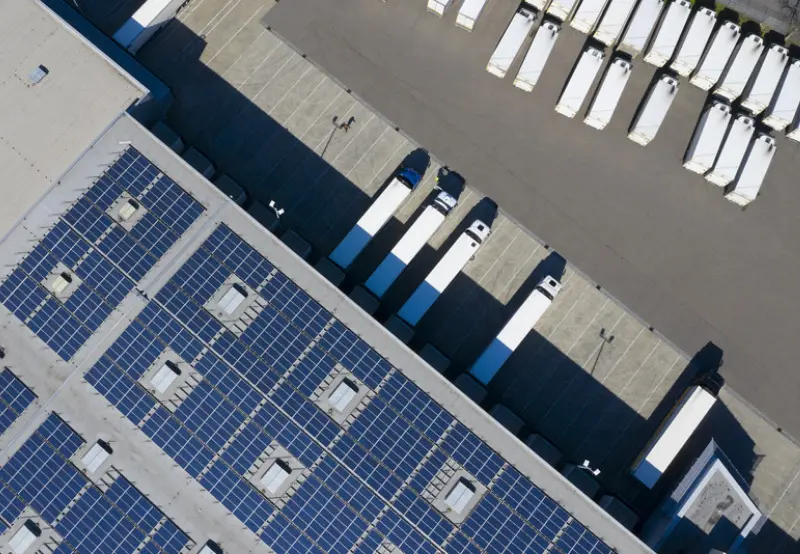
Dholasan and Detroj are being onboarded to solar power, targeting coverage of 35–45% of daytime load.
 04 · WASTE
Cutting India’s perishable losses
India loses ~30% of perishables between farm and fork. A reliable cold chain is a climate intervention — every kilo saved is emissions avoided.
SDGs we advance.
A reliable cold chain reduces food loss, lowers energy use, and cuts emissions — advancing seven UN goals. Click a goal to learn more.
Public commitments
What we’ve signed up for.
We are the first generation to feel the full effects of climate change and the last generation that can do something about it.
Barack Obama
On sustainability.

Build the climate cold chain with us.
Customer, partner, policy-maker or researcher — if cold chain and climate are your beat, let’s talk.